01 Answer first
What is included in a PET bottle blowing system for a water plant?
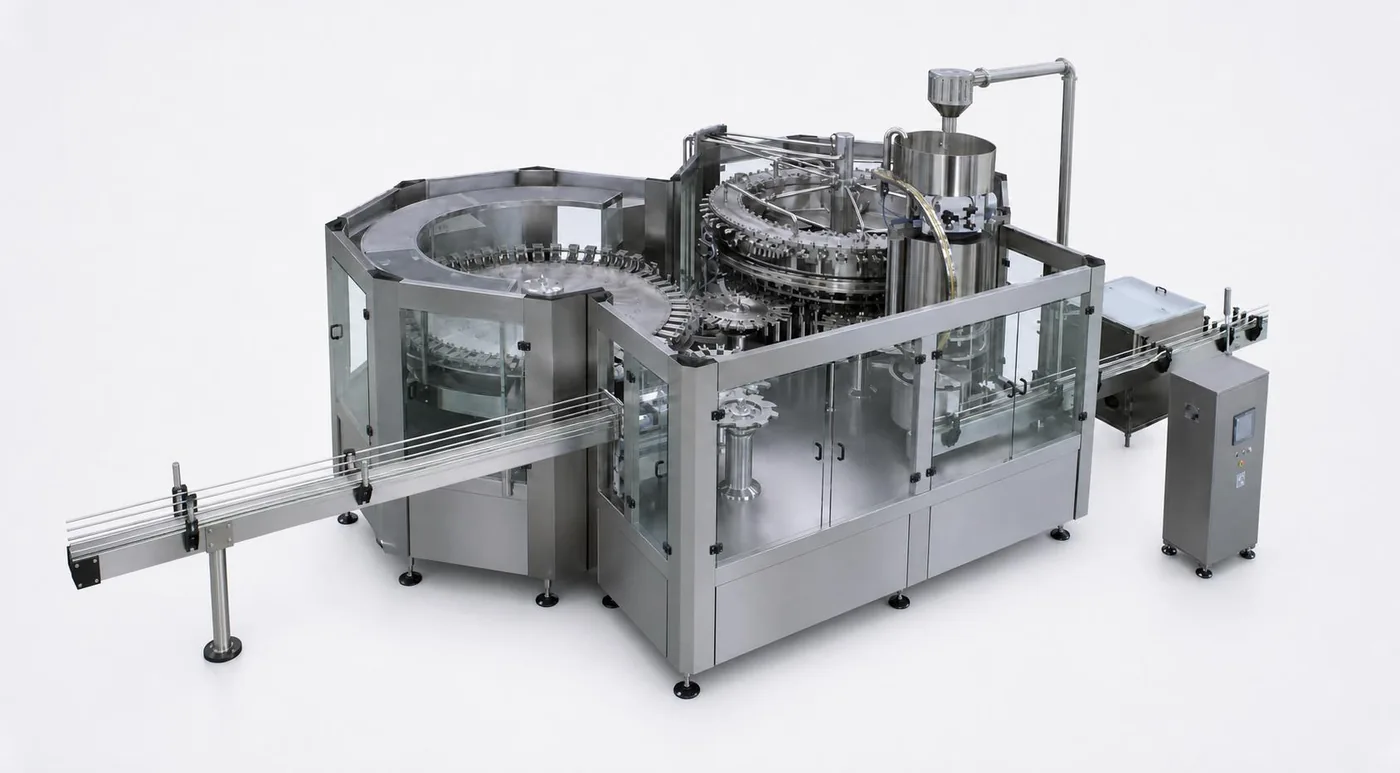
The project can include preform handling, heating and blow molding, molds, high-pressure and service-air generation and treatment, cooling, bottle inspection, rejects and direct air-conveyor transfer or empty-bottle storage. Final scope depends on bottle design, preform, required output, plant conditions and the purchased-bottle alternative.
Search intent boundary
What this guide covers — and where to go next
Define the PET bottle-production package from approved preform and bottle requirements through molds, heating, blowing air, cooling, quality checks and bottle delivery.
A bottle-blowing system specification with package boundary, approved formats, utility duties, quality criteria, interfaces, spares and acceptance basis.
A dynamic study of how a selected blow molder and filler exchange bottles, states, signals, buffers, stops and restart conditions.
02 Where it fits
Position in the project journey
Bottle-supply engineering - after package approval and before mold release, compressor, chiller, layout and filler-interface freeze.
03 Buyer inputs
What the buyer should prepare
- Approved bottle and preform drawings, resin basis, neck and representative samples
- Required bottles per format, operating schedule, quality limits and future molds
- Available electrical supply, ambient conditions, cooling and compressed-air strategy
- Factory layout, preform storage, bottle transfer, staffing and maintenance capability
04 Allot Tech and manufacturing-resource inputs
What should be clarified or provided
- Current blower and mold response for each approved bottle and preform
- High-pressure and service-air quality, flow, peak, pressure and connection requirements
- Cooling duty, water quality, temperatures, electrical loads and rejected-heat interface
- Bottle tests, guarding, changeover, transfer, FAT, documents and exclusions
Allot Tech coordinates requirement, quotation and project communication. Detailed engineering, manufacture, testing, documentation and confirmed service are performed by selected manufacturing resources according to the signed scope.
05 Technical scope
Questions and work to control
Compare In-House Blowing With Purchased Empty Bottles
In-house blowing can reduce empty-bottle transport and storage while adding equipment, utilities, molds, maintenance and preform controls. Purchased bottles shift those dependencies to supplier quality, transport, storage and continuity. Compare the same annual demand and accepted-bottle basis.
- Demand by bottle and season
- Supplier distance and inventory need
- Utility, labor and maintenance capability
- Future formats and mold investment
Freeze the Bottle and Preform Before Mold Release
The mold cannot resolve an open bottle design safely. Confirm volume, neck finish, dimensions, wall distribution objective, label panel, base stability, cap interface and downstream handling, supported by approved preform and resin information.
- Controlled bottle and preform drawings
- Reference material and preform weight
- Critical bottle tests and tolerances
- Formal sample and revision approval
Engineer Compressed Air and Cooling as Production Systems
Blow molding can create distinct high-pressure and service-air duties plus cooling demand. Compressor type, air quality and treatment, receivers, dryer or filters, chiller, pumps, distribution, heat rejection and backup strategy require project-specific calculations from the selected equipment.
- Normal and peak air demand
- Required pressure and quality at connection
- Cooling flow, temperature and water quality
- Local distribution and responsibility boundaries
Connect the Blower to the Filler Without an Interface Gap
The catalog shows an LP bottle unscrambler for disordered polyester bottles and air conveying as relevant bottle-handling references. A direct blower-to-filler path may use air conveying; stored purchased bottles may need unscrambling. Confirm bottle orientation, neck support, accumulation, control handshake, guarding and recovery.
- Direct transfer or bottle storage route
- Air conveyor or unscrambler requirement
- Blower-filler speed and stop coordination
- Reject, inspection and manual recovery points
Buyer questions answered
Practical answers before you request a quotation
Should a water plant blow bottles in-house?
It depends on demand, bottle supply, logistics, utilities, staffing, maintenance, factory space and future formats. Compare it with purchased bottles on one full-cost and risk basis.
Is the compressor included with a bottle blower?
Not automatically. Compressor, dryer, filters, receivers, chiller, piping and installation need explicit technical and commercial status.
Can one mold make several bottle sizes?
Generally each approved bottle design needs a defined mold and compatibility review. Do not assume different formats share tooling.
What does the catalog prove about blower selection?
It identifies semi-automatic, automatic and 5-gallon blow-molding categories as references. Current models, output, bottle range and auxiliaries require project confirmation.
How are bottles transferred to the filler?
They may move directly by an engineered air-conveyor route or through storage and unscrambling. The selected method needs control, buffer, hygiene and recovery definitions.
06 Responsibility
Assign the owner before the work is due
Land, building and civil work, permits, import and customs, local taxes, site utilities, unloading, lifting, local labor, travel support and commissioning materials are not automatically included. Confirm every responsibility before order.
07 Common risks
What commonly creates avoidable uncertainty
- A blower headline speed is compared without the same bottle, cavity and operating basis
- Compressor, air treatment, receiver, piping or chiller scope is assumed included
- Bottle design reaches the filler before dimensional and performance approval
- Direct transfer has no buffer or recovery plan for blower and filler stops
08 Acceptance or completion
How to know the stage is complete
Approved preforms produce bottles meeting agreed dimensional and functional criteria under stated conditions, auxiliaries and transfer interfaces are confirmed, and factory and site tests have a written boundary.
09 Required documents
Records that support the decision
- Bottle, preform and resin design basis
- Mold, blower and change-parts schedule
- Compressed-air, cooling and electrical load schedule
- Bottle-quality, FAT and line-interface records
Evidence basis
Official references and project limits
These primary sources support the general planning principles used in this guide. The rules, evidence and responsible authority for the actual project country must still be confirmed locally.
Project-specific proposal input
Turn this decision into a reviewable project brief
Share the product, container, target output, destination and available site information. Unknown inputs can remain open for the first review.
10 Next project step
Related guides and next project steps
Share the product, container, target output, destination and available site information. Unknown inputs can remain open for the first review.
Explore this topic cluster
Turnkey scope is project-specific and is defined by the signed technical and commercial agreement.