01 Answer first
Which interfaces determine whether a PET blow molder and filler work as one line?
Approved preform and bottle data, bottle-quality release, compressed-air and cooling conditions, transfer and accumulation, speed and machine-state signals, format change, rejects, and fault or restart logic must be designed and tested together.
Search intent boundary
What this guide covers — and where to go next
Coordinate bottle quality, transfer, accumulation, controls, rates, utilities, rejects, fault states and recovery between the selected blow molder and filler.
An interface control and integrated test package with signals, state logic, buffer basis, format data, abnormal scenarios, evidence and owners.
The first selection or complete specification of the blow-molding package and its compressors, molds, auxiliaries and standalone capability.
02 Where it fits
Position in the project journey
Bottle-production integration — before molds, conveyors, utilities, and line controls are released.
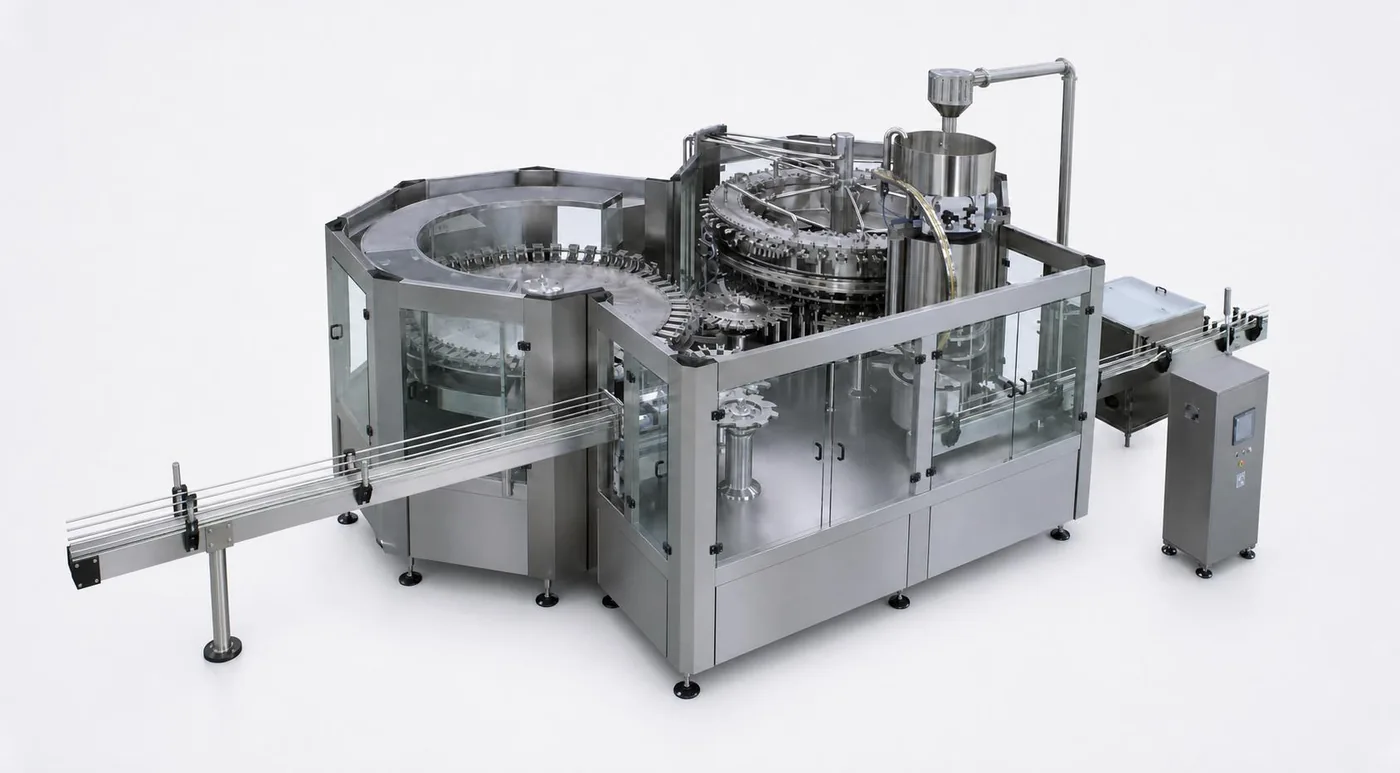
03 Buyer inputs
What the buyer should prepare
- Approved preform and bottle requirements
- Bottle-quality and reject rules
- Operating and maintenance resources
04 Allot Tech and manufacturing-resource inputs
What should be clarified or provided
- Mold, utility, transfer, and signal design
- Format procedures and settings
- Integrated functional-test evidence
Allot Tech coordinates requirement, quotation and project communication. Detailed engineering, manufacture, testing, documentation and confirmed service are performed by selected manufacturing resources according to the signed scope.
05 Technical scope
Questions and work to control
Freeze Preform, Neck, and Bottle Data
Use approved material, weight, finish, color, drawing, samples, design intent, supplier, and change-control records for every launch format.
Define the Bottle-Quality Interface
Assign checks for dimensions, finish condition, visual defects, stability, handling, cleanliness, and other buyer-approved package requirements before filling.
Coordinate Utility Operating Modes
Review high-pressure air, service air, power, heating, cooling, ventilation, drains, startup, standby, mold change, and controlled shutdown conditions.
Design the Transfer and Buffer Strategy
Define air conveyor route, bottle contact and guides, accumulation, access, empty-bottle reject, contamination protection, and response to filler stops.
Integrate Speed and State Controls
Exchange ready, run, starved, blocked, fault, stop, format, and reset states with coordinated ramp, accumulation, permissive, and restart logic.
Plan Format and Mold Change Work
Document molds, tooling, handling, storage, lifting, settings, first-off checks, approved samples, line clearance, and release authority.
Control Rejects and Start-Up Bottles
Define where nonconforming or transitional bottles are removed, identified, counted, segregated, and prevented from reaching filler or saleable stock.
Test the Integrated Disturbance Scenarios
Verify starved filler, blocked conveyor, blow-molder fault, filler fault, air loss, format mismatch, emergency stop, and controlled restart under the agreed test plan.
Buyer questions answered
Practical answers before you request a quotation
Can matching nominal rates prove integration?
No. Transfer, accumulation, ramping, faults, formats, utilities, quality, and recovery behavior also determine the system result.
Why are approved preforms needed early?
Their material and geometry affect bottle development, molds, heating, handling, testing, and quality decisions.
Should filler-stop behavior be tested?
Yes. It affects bottle accumulation, blow-molder state, rejects, recovery, and operator action.
06 Responsibility
Assign the owner before the work is due
Land, building and civil work, permits, import and customs, local taxes, site utilities, unloading, lifting, local labor, travel support and commissioning materials are not automatically included. Confirm every responsibility before order.
07 Common risks
What commonly creates avoidable uncertainty
- Unapproved preforms reach mold release
- Filler stops create uncontrolled bottles
- Utility peaks are absent from site design
08 Acceptance or completion
How to know the stage is complete
Approve when physical bottles, utilities, controls, formats, rejects, and disturbance recovery have one agreed integration and test basis.
09 Required documents
Records that support the decision
- Blow-fill interface matrix
- Format and mold register
- Integrated test protocol
10 Next project step
Turn this decision into a reviewable project brief
Share the product, container, target output, destination and available site information. Unknown inputs can remain open for the first review.
Turnkey scope is project-specific and is defined by the signed technical and commercial agreement.