01 Answer first
What should a wet commissioning water run prove before product trials?
It should verify clean system boundaries, intended flow paths, tanks and treatment modes, instruments and controls under flow, filler demand, drains, abnormal responses, water status and disposal, and readiness for the next controlled trial.
02 Where it fits
Position in the project journey
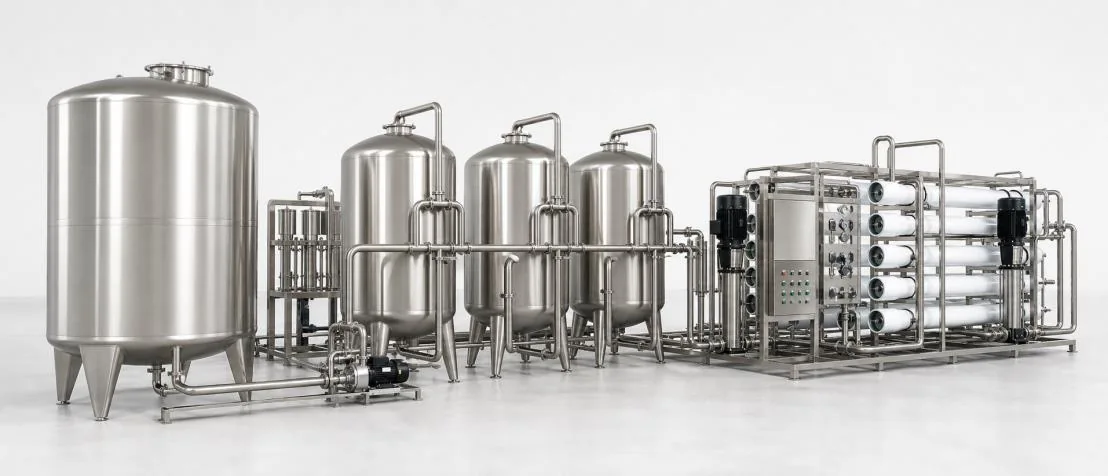
Wet commissioning — after dry functional release and before controlled product trials.
03 Buyer inputs
What the buyer should prepare
- Approved water status and disposal
- Qualified quality and safety release
- Ready utilities, drains, and operators
04 Allot Tech and manufacturing-resource inputs
What should be clarified or provided
- System sequence and functional checks
- Control tuning and measurement records
- Findings and final configuration
Allot Tech coordinates requirement, quotation and project communication. Detailed engineering, manufacture, testing, documentation and confirmed service are performed by selected manufacturing resources according to the signed scope.
05 Technical scope
Questions and work to control
Define Water Source and Product Status
State the water identity, approved use, sample status, whether it may contact product paths, and where all trial water and filled containers will go.
Verify Clean and Ready System Boundaries
Confirm completion, flush or cleaning status, open ends, temporary hoses, drains, tank condition, instruments, isolation, and qualified release before filling.
Introduce Water in a Controlled Sequence
Fill, vent, circulate, drain, transfer, and increase flow system by system while checking leaks, direction, levels, pressure, pump condition, and unexpected routes.
Test Instruments and Control Loops Under Flow
Compare installed flow, level, pressure, quality, temperature, valve, pump, alarm, and trend behavior with the approved operating narrative.
Run Treatment and Tank Modes
Verify production, standby, recirculation, backwash or regeneration where applicable, tank high and low, reject, drain, cleaning, and controlled recovery.
Integrate the Filler and Packaging Boundary
Check treated-water demand, filler supply, start and stop, tank response, empty or trial containers, drains, rejects, conveyors, and downstream line states.
Challenge Abnormal Water Scenarios
Use approved safe simulations for utility loss, low source, unsuitable quality signal, tank fault, pump fault, downstream stop, instrument fault, controlled stop, and restart.
Reconcile Water, Findings, and Release
Record water use and disposal, samples, measured data, leaks, tuning, deviations, temporary items, cleaning need, final status, and authorization for product trials.
Buyer questions answered
Practical answers before you request a quotation
Is water used in commissioning automatically saleable product?
No. The buyer quality and product-release process must explicitly determine status and disposition.
Why test drains during wet commissioning?
Real flow can reveal capacity, routing, splash, backflow, containment, and local interface problems.
Can wet commissioning start before all systems are complete?
Only within an approved isolated boundary with controlled interfaces, safety, water status, and downstream consequences.
06 Responsibility
Assign the owner before the work is due
Land, building and civil work, permits, import and customs, local taxes, site utilities, unloading, lifting, local labor, travel support and commissioning materials are not automatically included. Confirm every responsibility before order.
07 Common risks
What commonly creates avoidable uncertainty
- Trial water enters saleable status without approval
- Temporary hoses create unintended paths
- Drain or tank behavior is untested at real flow
08 Acceptance or completion
How to know the stage is complete
Release when water status, system flow, controls, drains, abnormal response, findings, temporary items, and final condition are fully recorded.
09 Required documents
Records that support the decision
- Wet commissioning protocol
- Water-run data sheets
- Product-trial release record
10 Next project step
Turn this decision into a reviewable project brief
Share the product, container, target output, destination and available site information. Unknown inputs can remain open for the first review.
Turnkey scope is project-specific and is defined by the signed technical and commercial agreement.