01 Answer first
How can a buyer verify that a PET bottle will transfer through a rinse-fill-cap monoblock?
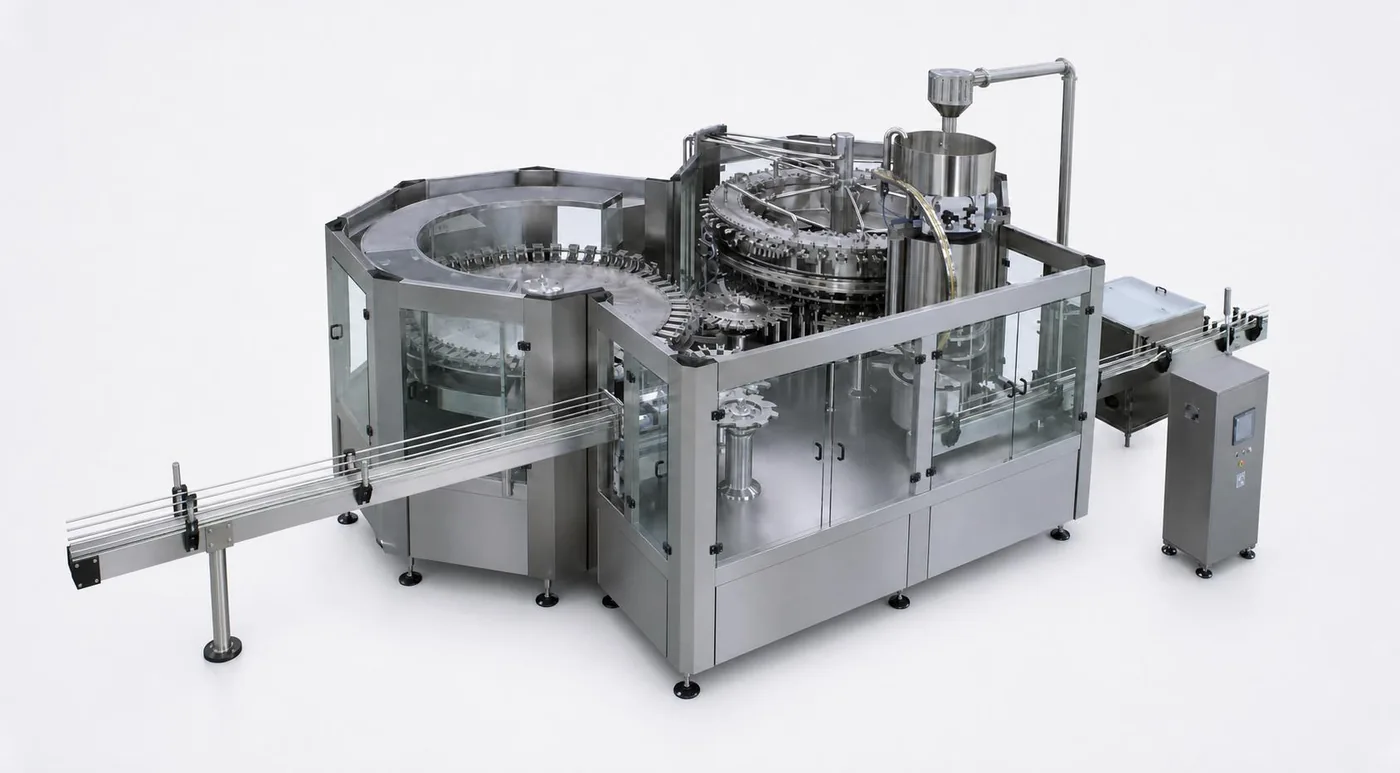
Compare the controlled neck-finish and support-ring geometry, bottle drawing and tolerance stack with grippers, neck guides, starwheels, centering and capper transfer. Prove each reference bottle with production-representative samples at startup, speed, stop and restart conditions.
02 Where it fits
Position in the project journey
Filling and closure definition - before configuration, FAT and operating release.
03 Buyer inputs
What the buyer should prepare
- Controlled bottle and neck-finish drawings with tolerances
- Approved samples from representative preform and mold cavities
- Format mix, speed and changeover expectations
- Visible-damage and transfer acceptance criteria
04 Allot Tech and manufacturing-resource inputs
What should be clarified or provided
- Contact-point drawing and change-part list
- Tolerance and clearance review
- Format trial, fault challenge and inspection plan
Allot Tech coordinates requirement, quotation and project communication. Detailed engineering, manufacture, testing, documentation and confirmed service are performed by selected manufacturing resources according to the signed scope.
05 Technical scope
Questions and work to control
Answer First: Approve the Bottle-to-Change-Part Geometry
Compare the controlled neck-finish and support-ring geometry, bottle drawing and tolerance stack with grippers, neck guides, starwheels, centering and capper transfer. Prove each reference bottle with production-representative samples at startup, speed, stop and restart conditions.
Define the Decision Boundary
Identify every contact and support point, required clearance, wear allowance, bottle orientation and format part. Review maximum and minimum drawing conditions rather than checking one hand-picked sample.
Buyer Inputs for Approve the Bottle-to-Change-Part Geometry
For PET Bottle Neck-Handling and Starwheel Compatibility, first verify Controlled bottle and neck-finish drawings with tolerances and Approved samples from representative preform and mold cavities. Identify the owner and revision of every input, and keep unknown information visible until evidence closes it.
- Controlled bottle and neck-finish drawings with tolerances
- Approved samples from representative preform and mold cavities
- Format mix, speed and changeover expectations
- Visible-damage and transfer acceptance criteria
Connect This Decision to the Complete Plant
Connect empty-bottle air transport, rinser pickup, filler centering, capper hold-down and discharge. Inspect scuffing, neck damage, jams, dropped bottles and unstable recovery after upstream or downstream stops.
Responsibility Boundary for PET Bottle Neck-Handling and Starwheel Compatibility
The buyer owns the approved product and package specifications and quality-release rules. Suppliers must state operating conditions, change parts, control logic, limitations and acceptance evidence. At the Approve the Bottle-to-Change-Part Geometry gate, require the supplier to document Contact-point drawing and change-part list, while the buyer owns Format mix, speed and changeover expectations and obtains qualified local confirmation where applicable.
- Contact-point drawing and change-part list
- Tolerance and clearance review
- Format trial, fault challenge and inspection plan
Risks That Can Invalidate Approve the Bottle-to-Change-Part Geometry
Nominal speed cannot compensate for unstable product supply, incompatible containers, uncontrolled stops or unverified closure integrity. In this decision, pay particular attention to One nominal sample hides tolerance conflict and Air conveyor and monoblock use different support assumptions. Record the owner, due gate, action and closure evidence for every risk.
- One nominal sample hides tolerance conflict
- Air conveyor and monoblock use different support assumptions
- A transfer passes slowly but jams during restart
Evidence to Close Approve the Bottle-to-Change-Part Geometry
Close PET Bottle Neck-Handling and Starwheel Compatibility only when Signed geometry and tolerance review and Change-part and format matrix are current, reviewable, linked to the project revision, and approved by named decision owners.
- Signed geometry and tolerance review
- Change-part and format matrix
- Sample identity and transfer trial record
- Speed, stop and restart acceptance evidence
Next Step: Approve the Bottle-to-Change-Part Geometry
Send the available inputs for PET Bottle Neck-Handling and Starwheel Compatibility, including Controlled bottle and neck-finish drawings with tolerances, for a project-specific interface review. A project-specific review can organize open inputs and interfaces, but final scope, performance, responsibilities and commercial commitments exist only in the signed technical and commercial agreement.
Buyer questions answered
Practical answers before you request a quotation
How can a buyer verify that a PET bottle will transfer through a rinse-fill-cap monoblock?
Compare the controlled neck-finish and support-ring geometry, bottle drawing and tolerance stack with grippers, neck guides, starwheels, centering and capper transfer. Prove each reference bottle with production-representative samples at startup, speed, stop and restart conditions.
Which buyer inputs should be confirmed for PET Bottle Neck-Handling and Starwheel Compatibility?
Start with Controlled bottle and neck-finish drawings with tolerances and Approved samples from representative preform and mold cavities. Keep unknowns open until their owners provide evidence.
What evidence should close this decision?
Review Signed geometry and tolerance review together with Change-part and format matrix. Signed project documents and qualified local decisions remain controlling.
06 Responsibility
Assign the owner before the work is due
Land, building and civil work, permits, import and customs, local taxes, site utilities, unloading, lifting, local labor, travel support and commissioning materials are not automatically included. Confirm every responsibility before order.
07 Common risks
What commonly creates avoidable uncertainty
- One nominal sample hides tolerance conflict
- Air conveyor and monoblock use different support assumptions
- A transfer passes slowly but jams during restart
08 Acceptance or completion
How to know the stage is complete
Close PET Bottle Neck-Handling and Starwheel Compatibility only when Signed geometry and tolerance review and Change-part and format matrix are current, reviewable, linked to the project revision, and approved by named decision owners.
09 Required documents
Records that support the decision
- Signed geometry and tolerance review
- Change-part and format matrix
- Sample identity and transfer trial record
- Speed, stop and restart acceptance evidence
Evidence basis
Official references and project limits
These primary sources support the general planning principles used in this guide. The rules, evidence and responsible authority for the actual project country must still be confirmed locally.
10 Next project step
Turn this decision into a reviewable project brief
Share the product, container, target output, destination and available site information. Unknown inputs can remain open for the first review.
Turnkey scope is project-specific and is defined by the signed technical and commercial agreement.