01 Answer first
What equipment is needed for a 5-gallon water bottling plant?
The project can require dirty-container receiving and sorting, cap removal, external and internal brushing, multi-stage washing or sanitizing, clean-container protection, water filling, cap feeding and application, checks, counting and discharge. Treatment, storage, cleaning chemistry, wastewater, utilities, return logistics and rejection rules also need explicit owners.
Buyer problem-to-decision map
Five-Gallon System Questions for a Returnable-Container Route
A returnable large-container system has different inspection, washing, handling and logistics responsibilities from a small PET line. Define the return loop before choosing equipment.
Is a five-gallon water bottling plant the same as a PET bottle line?
No. Returnable containers can require receipt and status control, external and internal inspection, rejection, multi-stage washing and sanitizing, filling and capping, leak or quality checks and management of returned-container history.
- Inputs needed
- Container material, geometry and ownership; return and distribution model; incoming condition; product target; local hygiene requirements; saleable demand and labor.
- Decision evidence
- Return-loop process map, container acceptance criteria, washer and filler basis, status controls, utility loads, trials and responsibility matrix.
How many returnable bottles are needed for operation?
Calculate the circulating fleet from demand, route and customer cycle time, pickup and loss, quarantine and rejection, washing availability, inventory buffer and growth case—not just filler output.
- Inputs needed
- Daily and seasonal demand; delivery routes; customer retention time; return rate; damage and rejection evidence; cleaning capacity; inventory and replacement policy.
- Decision evidence
- Container-loop model with base and adverse cases, fleet ownership, status counts, replenishment trigger and evidence update plan.
How is cleaning performance for returnable containers defined?
Define the incoming soil and risk categories, inspection and rejection rules, wash stages and operating limits, chemical and temperature controls, rinsing, verification and response to an out-of-limit result.
- Inputs needed
- Container history and material; incoming contamination policy; approved chemicals; water quality; contact time and temperature basis; sampling and local quality requirements.
- Decision evidence
- Validated or otherwise approved cleaning procedure as required, controlled parameters, test and inspection results, traceability, deviations and release authority.
How should the large-container filler and capper be specified?
Base it on approved container and closure ranges, hygiene and product path, sustainable line rate, handling stability, changeover, closure application, inspection and integrated upstream and downstream states.
- Inputs needed
- Container and closure samples and drawings; SKU matrix; product specification; output and shift basis; incoming bottle quality; coding, labeling and pack route.
- Decision evidence
- Controlled datasheets, format and change-part schedule, line balance, material trials, quality checks, fault-state tests and acceptance protocol.
02 Where it fits
Position in the project journey
Returnable-container system definition - before washer, filler, logistics, hygiene flow and utility selection.
03 Buyer inputs
What the buyer should prepare
- Container volume, neck, cap, handle, material and approved samples
- Return route, expected soil condition, foreign-container and damage policy
- Finished-water target, required hourly and daily dispatch basis
- Cleaning-agent constraints, utilities, drainage, labor and factory zoning
04 Allot Tech and manufacturing-resource inputs
What should be clarified or provided
- Receiving, inspection, cap-removal, wash, fill, close and discharge sequence
- Wash stages, temperatures or chemistry interfaces subject to project confirmation
- Container compatibility, rating basis, rejects, operator tasks and safeguards
- Water, drainage, power, air, chemical, FAT, document and local-work schedule
Allot Tech coordinates requirement, quotation and project communication. Detailed engineering, manufacture, testing, documentation and confirmed service are performed by selected manufacturing resources according to the signed scope.
05 Technical scope
Questions and work to control
Control the Return Loop Before the Filling Machine
Returned containers can arrive with variable external soil, residual liquid, damaged necks, odors or foreign ownership marks. Receiving, sorting, quarantine and rejection rules determine which containers may enter the washer and who handles nonconforming returns.
- Return ownership and traceability
- Visual and odor inspection criteria
- Cap and handle condition
- Reject segregation and disposition
Separate Dirty Washing From Clean Filling
Factory flow should prevent returned containers, wash discharge and cleaning chemicals from contaminating the clean-container and filling zones. Confirm drainage, ventilation, splash control, operator movement and protected transfer into filling.
- Dirty receiving and decapping zone
- External and internal cleaning stages
- Clean-container protection and inspection
- Filled-container discharge and storage
Treat the QGF Line as a Catalog Reference
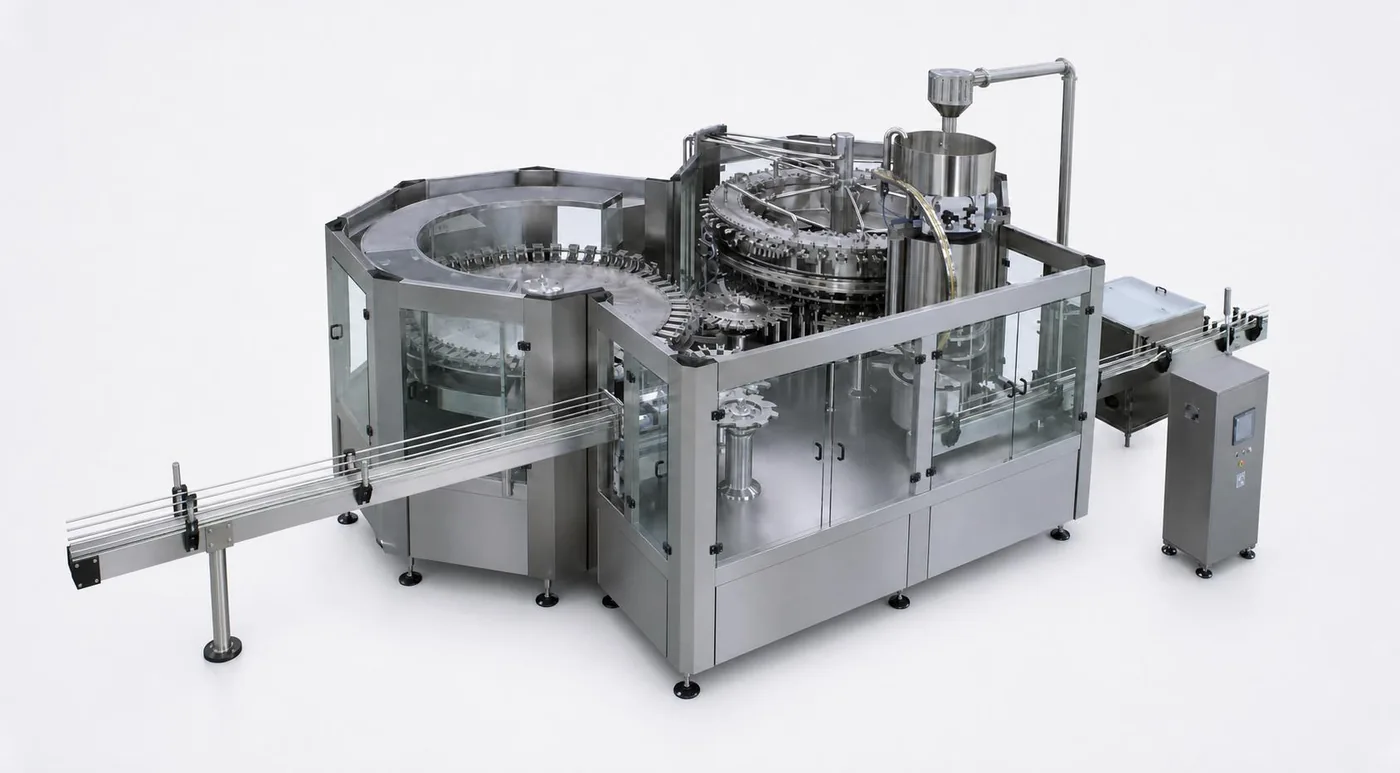
The catalog describes QGF equipment for 18.9-liter or 5-gallon washing-filling-capping and identifies options such as leakage checking, external brushing, internal brushing and cap removal. Its model table contains repeated capacity values, so no table value is presented here as confirmed; current model and output require project confirmation.
- Confirm current equipment sequence
- Resolve the rating directly in the project response
- Confirm container and closure samples
- Confirm wash stages, utilities and control scope
Design Dispatch Around the Reuse Business Model
A 5-gallon operation also needs filled-container inspection, code or identity controls, storage, racks or other handling, vehicle loading and return accountability. These logistics can constrain daily saleable output even when the filler has unused cycles.
- Filled-container quality checks
- Cap seal and leakage criteria
- Rack, pallet or route-truck interface
- Inventory, return and reject records
Buyer questions answered
Practical answers before you request a quotation
Is a 5-gallon line only a washer-filler-capper?
No. Return receiving, inspection, cap removal, brushing, clean transfer, checks, discharge, utilities, wastewater and logistics may also be part of the project.
What capacity does the QGF catalog guarantee?
None on this page. The catalog table contains repeated values that require clarification; the current model and project rating must be confirmed in writing.
Can every returned container be reused?
No assumption should be made. The buyer needs acceptance, rejection, quarantine and disposition criteria appropriate to the container and local requirements.
Can a 5-gallon line share treatment with a small-bottle line?
Potentially, after simultaneous demand, hygienic storage, scheduling, failure modes and utility capacity are reviewed. Shared scope must be explicit.
Which return samples should be tested?
The protocol should include representative acceptable, borderline and reject containers plus approved caps and cleaning inputs, subject to safe agreed test conditions.
06 Responsibility
Assign the owner before the work is due
Land, building and civil work, permits, import and customs, local taxes, site utilities, unloading, lifting, local labor, travel support and commissioning materials are not automatically included. Confirm every responsibility before order.
07 Common risks
What commonly creates avoidable uncertainty
- Unknown return-container condition makes a generic washing cycle unreliable
- Dirty and clean containers cross in the factory flow
- Published QGF capacity values are used despite unresolved catalog-table inconsistency
- Cleaning chemicals and wastewater responsibilities remain unassigned
08 Acceptance or completion
How to know the stage is complete
The system basis defines accepted and rejected return containers, the controlled wash and clean-transfer sequence, utility and chemical interfaces, agreed test materials and project-specific rating and evidence.
09 Required documents
Records that support the decision
- Return-container condition and acceptance specification
- Dirty-to-clean process and zoning flow
- Wash, utility, chemical and wastewater interface schedule
- Project-confirmed QGF model, FAT and open-item record
Evidence basis
Official references and project limits
These primary sources support the general planning principles used in this guide. The rules, evidence and responsible authority for the actual project country must still be confirmed locally.
Project-specific proposal input
Turn this decision into a reviewable project brief
Share the product, container, target output, destination and available site information. Unknown inputs can remain open for the first review.
10 Next project step
Related guides and next project steps
Share the product, container, target output, destination and available site information. Unknown inputs can remain open for the first review.
Explore this topic cluster
Turnkey scope is project-specific and is defined by the signed technical and commercial agreement.