01 Answer first
Which interfaces must be defined between water-treatment skids and a bottling plant?
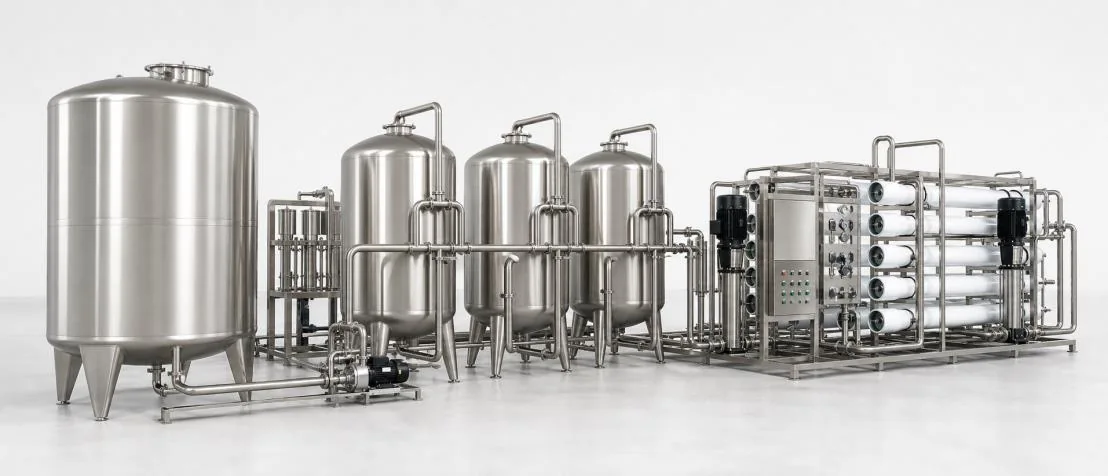
Define hydraulic and interstage connections, operating conditions, chemicals, utilities, drains, environment, controls, alarms, data, sampling, calibration, cleaning, maintenance access, consumables, and buyer-supplier battery limits for every mode.
02 Where it fits
Position in the project journey
Treatment integration — before skid, utility, control, and site-service release.
03 Buyer inputs
What the buyer should prepare
- Source and product-control basis
- Local utility, chemical, drain, and safety provisions
- Laboratory and operating ownership
04 Allot Tech and manufacturing-resource inputs
What should be clarified or provided
- Package connections and modes
- Control and data exchanges
- Consumable and maintenance requirements
Allot Tech coordinates requirement, quotation and project communication. Detailed engineering, manufacture, testing, documentation and confirmed service are performed by selected manufacturing resources according to the signed scope.
05 Technical scope
Questions and work to control
Freeze the Approved Treatment Process Basis
Link each skid to source evidence, intended product, qualified process decisions, operating modes, capacity basis, and the limits of supplier responsibility.
Define Hydraulic Battery Limits
Record inlet, outlet, recirculation, bypass where approved, reject, drain, overflow, sample, chemical, and cleaning connections with conditions and ownership.
Map Interstage Control Dependencies
Identify tank levels, permissives, pump calls, valve states, quality status, alarms, shutdowns, and restart conditions exchanged between packages.
Coordinate Utility and Environmental Needs
Include power, instrument air, service water, cooling, heating, ventilation, room conditions, lighting, access, and local safety provisions.
Control Chemical and Consumable Interfaces
Define approved materials, storage, transfer, dosing equipment, containment, handling, replacement, waste, and qualified local safety responsibilities.
Plan Sampling, Instruments, and Records
Assign measurement points, instrument ranges, calibration, laboratory samples, trend data, status decisions, and record retention to the approved control plan.
Resolve Cleaning and Maintenance Access
Check isolation, depressurization, drain-down, media or membrane handling, filter replacement, lifting, hose routes, work space, and restoration verification.
Test Interfaces Across All Operating Modes
Verify normal production, standby, cleaning, regeneration, low source, tank full, utility loss, alarm, controlled stop, and restart before handover.
Buyer questions answered
Practical answers before you request a quotation
Why is an equipment list not enough?
It does not define how packages exchange water, controls, utilities, chemicals, data, maintenance access, or responsibility.
Should regeneration and cleaning modes be included?
Yes. They can change flows, drains, chemical use, staffing, controls, and availability.
Who confirms the treatment process?
Qualified water-treatment, laboratory, food-safety, and local regulatory parties should confirm the project basis.
06 Responsibility
Assign the owner before the work is due
Land, building and civil work, permits, import and customs, local taxes, site utilities, unloading, lifting, local labor, travel support and commissioning materials are not automatically included. Confirm every responsibility before order.
07 Common risks
What commonly creates avoidable uncertainty
- Each skid is designed in isolation
- Cleaning drains exceed the site route
- Interstage permissives are undefined
08 Acceptance or completion
How to know the stage is complete
Approve when every interface has conditions, tags, ownership, drawings, control behavior, and a verification step for applicable modes.
09 Required documents
Records that support the decision
- Treatment interface matrix
- Control narrative
- Connection schedule
10 Next project step
Turn this decision into a reviewable project brief
Share the product, container, target output, destination and available site information. Unknown inputs can remain open for the first review.
Turnkey scope is project-specific and is defined by the signed technical and commercial agreement.