01 Answer first
How should a spring-water bottling plant be designed?
Confirm the recognized spring source, representative water data, variability, extraction and transfer, target market and locally permitted treatments. Then select only justified process steps, protect hygienic storage and distribution, and connect the approved water to the chosen container, filling, labeling, packing and traceability route.
02 Where it fits
Position in the project journey
Spring-water source and process definition - before treatment, source transfer, label and bottling-system release.
03 Buyer inputs
What the buyer should prepare
- Spring source identity, ownership or access basis and protection responsibilities
- Representative analysis, seasonal variation and extraction or transfer conditions
- Target product name, market, label claims and competent local advisers
- Container, closure, output, factory, quality, utility and distribution requirements
04 Allot Tech and manufacturing-resource inputs
What should be clarified or provided
- Process response limited to the approved source and permitted-treatment basis
- Source-transfer, filtration if justified, storage, sanitation and filler interfaces
- Package line, monitoring and traceability response on the common project basis
- Open regulatory inputs, assumptions, exclusions, evidence and project confirmation needs
Allot Tech coordinates requirement, quotation and project communication. Detailed engineering, manufacture, testing, documentation and confirmed service are performed by selected manufacturing resources according to the signed scope.
05 Technical scope
Questions and work to control
Treat the Spring Source as Part of the Plant
The bottling project begins at the source, not at the treatment-room inlet. Extraction, collection, transfer distance, intermediate storage, protection from contamination and sampling points can determine process and facility decisions.
- Defined source and collection point
- Protection and access responsibility
- Transfer route and residence time
- Sampling and change-control locations
Confirm Which Treatments Are Permitted
Product definitions and permitted treatments differ by jurisdiction. The catalog identifies hollow-fiber ultrafiltration for mineralized and spring-water applications as a reference category, but suitability, effect on the product and legal acceptability require project-specific qualified confirmation.
- Local product definition and target market
- Purpose and effect of each proposed stage
- UF or other process only when justified
- Authority and qualified technical approval
Protect Water Through Storage and Filling
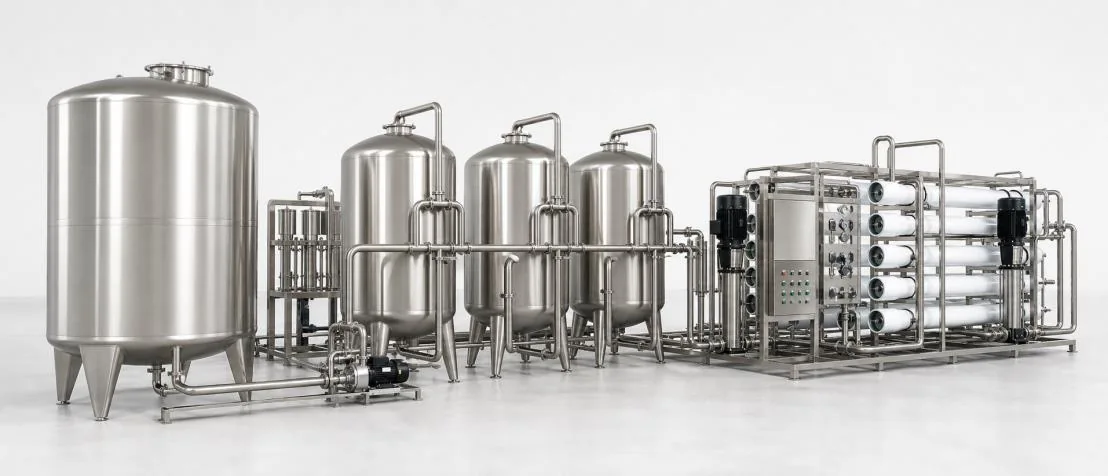
Spring water needs a controlled hygienic path through any treatment, storage, transfer and the filler inlet. Tanks, vents, piping, terminal protection, cleaning, monitoring and hold conditions should be part of one contamination-control strategy.
- Closed and protected product-water boundary
- Cleanable tanks and distribution
- Defined sanitation and release conditions
- Sampling before and after critical interfaces
Make Source Traceability Visible in the Pack Record
Label content, lot coding, source record and production release should connect the saleable bottle to the approved product basis. Equipment can apply labels and codes, while legal claims and record retention remain buyer and qualified-party responsibilities unless explicitly included.
- Approved label and source statement
- Lot or production-code structure
- Source and tank batch linkage
- Finished-product hold and release record
Buyer questions answered
Practical answers before you request a quotation
Is spring water the same as purified water?
Do not assume so. The legal product definition, source basis and permitted treatments can differ by market and should be confirmed locally.
Can spring water use ultrafiltration?
The catalog identifies UF as a reference category for spring-water applications, but project suitability and legal acceptability require qualified confirmation.
Should reverse osmosis be included?
Not automatically. It can materially change water composition and the intended product basis; select treatment only after source and regulatory review.
What source information belongs in the RFQ?
Include source identity, representative analyses and variability, collection and transfer conditions, target market, approved product basis and responsible advisers.
How is spring-water traceability maintained?
Connect source and transfer records, tank or production batches, monitoring results, label and lot codes, holds and release decisions in the quality system.
06 Responsibility
Assign the owner before the work is due
Land, building and civil work, permits, import and customs, local taxes, site utilities, unloading, lifting, local labor, travel support and commissioning materials are not automatically included. Confirm every responsibility before order.
07 Common risks
What commonly creates avoidable uncertainty
- Spring water is treated as a marketing name without a confirmed source and legal basis
- Unapproved treatment changes the intended product identity
- Long source transfer, tanks or distribution introduce an uncontrolled hygiene interface
08 Acceptance or completion
How to know the stage is complete
The project route preserves the confirmed source and product basis, uses only approved process steps, controls transfer and storage hygiene and links monitoring and label records to accountable owners.
09 Required documents
Records that support the decision
- Spring source and representative analysis record
- Permitted-treatment and product-classification decision
- Source-transfer, storage and sanitation flow
- Packaging, monitoring and traceability acceptance plan
Evidence basis
Official references and project limits
These primary sources support the general planning principles used in this guide. The rules, evidence and responsible authority for the actual project country must still be confirmed locally.
Project-specific proposal input
Turn this decision into a reviewable project brief
Share the product, container, target output, destination and available site information. Unknown inputs can remain open for the first review.
10 Next project step
Related guides and next project steps
Share the product, container, target output, destination and available site information. Unknown inputs can remain open for the first review.
Turnkey scope is project-specific and is defined by the signed technical and commercial agreement.